

Connected Vehicles and the Talent to Build Them


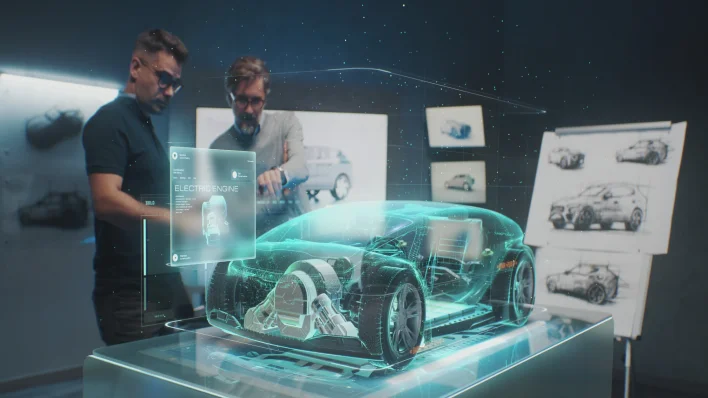
There is little doubt that the automotive industry is in the midst of one of the most dynamic periods of change since the introduction of the assembly line. The passenger vehicle as we know it is undergoing so much fundamental change, it’s hardly the same product as it was a couple of decades ago.
Today’s passenger vehicles are loaded with options that may have seemed like science fiction a decade ago, such as safety features that correct your steering or braking, parallel parking assistance, and, of course, autonomous self-driving cars.
From the drawing board to the assembly line to the repair shop, the automotive workforce is going through some dramatic changes. Our latest research shows that 74% of automotive employers are struggling to find skilled talent—and that struggle is poised to intensify.
The critical tech skills gap is widening due to the increasing volume of data created by connected vehicles, along with the need for cybersecurity, EV expertise and digital customer experience (CX).
Today’s connected vehicles have more than 100 sensors, which create a constant stream of data. Industry analysts estimate every connected car generates 1-2 terabytes of raw data every day. This is equivalent to 500,000 photos or a 13-million-page document!
Looking Into the Near Future
The market for EVs and hybrids is growing rapidly. In 2024, electric, hybrid and plug-in hybrid sales made up 20% of all U.S. vehicle sales, with the projection that this will hit 25% by the end of 2025. Designing and building these vehicles will require a steady and growing supply of electrical engineers, mechanical engineers, EV technicians, infrastructure specialists, research scientists and others.
To support the needs of connected vehicles, otherwise known as software-defined vehicles, the U.S. expects 26% growth in auto sector developer jobs by 2031. This surge will create demand for a variety of roles, including software engineers, data analysts, cybersecurity experts, and EV infrastructure specialists. For instance, technicians skilled in maintaining and repairing EVs and charging stations will be crucial as the market for electric and hybrid vehicles continues to expand.
Upskilling and Beyond: Where Will the Talent Come From?
Many automakers are turning to the tech industry. The problem is, the talent shortage is profound here too, with 73% of IT employers reporting difficulty finding skilled talent.
There is no one answer to this question, but there are some strategies.
Upskilling
Investing in upskilling your current workforce can bridge the skills gap and prepare your team for the future. Here are some strategies to consider:
- Internal Training Programs: Develop comprehensive training programs that focus on emerging technologies, cybersecurity, data analysis, and EV maintenance. Utilize both in-house experts and external trainers to provide a well-rounded education. For details about Manpower’s own upskilling options in these technologies, see “How Manpower Can Help” below.
- Partnerships with Educational Institutions: Collaborate with universities, community colleges, and technical schools to create tailored courses that align with your company's needs. These partnerships can also provide a pipeline of new graduates who are ready to step into specialized roles.
- Online Learning Platforms: Leverage online courses and certifications from platforms like Coursera, Udacity, and LinkedIn Learning. These resources offer flexible learning options that employees can complete at their own pace.
- Mentorship Programs: Establish mentorship programs where experienced employees can share their knowledge with newer team members. This not only helps in skill development but also fosters a culture of continuous learning.
Unlikely Sources
In addition to upskilling, consider broadening your talent search to include non-traditional candidates. Here are some avenues to explore:
- Career Changers: Professionals from other industries may have transferable skills that are valuable in the automotive sector. The most obvious example is in the IT sector, where professionals can often step easily into roles focused on vehicle software and cybersecurity. But today, most people possess some degree of tech skills, so it pays to broaden your search to those from other industries.
- Military Veterans: Veterans often possess strong technical skills, discipline, and problem-solving abilities. Many have experience with advanced technologies and can adapt quickly to new roles.
- Apprenticeship Programs: Create apprenticeship programs that provide hands-on training for individuals who may not have formal education but show potential and enthusiasm for the field.
Creating an Employer Value Proposition
In addition to upskilling, creating a compelling Employee Value Proposition (EVP) is essential to attract and retain top talent. An EVP should highlight what makes your industry and your company a great place to work. The automotive industry is currently at the forefront of technological advancements, making it an exciting place to work. The opportunity to be part of cutting-edge technology should be a big part of your EVP.
Career development opportunities and advancement potential are also proven strategies for attracting talent. If individuals can visualize a future with your organization, they’ll be much more liable to climb aboard.
Similarly, a supportive work environment and company culture are key. Be sure your compensation and benefits are on par with the rest of the industry.
Showcase your company culture, values, and employee experiences on your website and social media. Encourage employees to share testimonials and workplace stories and maintain a strong presence on employer review sites.
By focusing on upskilling, exploring non-traditional talent sources, and creating a strong EVP, your company can navigate the challenges of the evolving automotive industry and build a talented, future-ready workforce.
How Manpower Can Help
Partnering with Manpower can help you in a variety of ways:
Flexible Talent Options: Whether you need to add an engineer to your staff or you’re looking for dozens of contingent workers to install and maintain charging stations, we can answer the call.
In-House Upskilling: Manpower associates have access to MyPath, a no-cost upskilling program that can lead to certifications in some of the industry’s most needed skills, such as electric vehicle fundamentals, electric vehicle battery packaging and assembly.
Apprenticeships: As a National Apprenticeship Program Sponsor, we can also help you create an apprenticeship program. These programs offer mutual benefits: employers can train participants to meet their specific needs, while employees earn a salary as they gain valuable skills.
Crafting your EVP: We know the market, the talent, and we’re experts at attraction and retention.
The future belongs to those who build it—and the talent who powers it. Learn more about partnering with us.