

Why Workforce Planning Is the New Power Move in the Automotive Industry


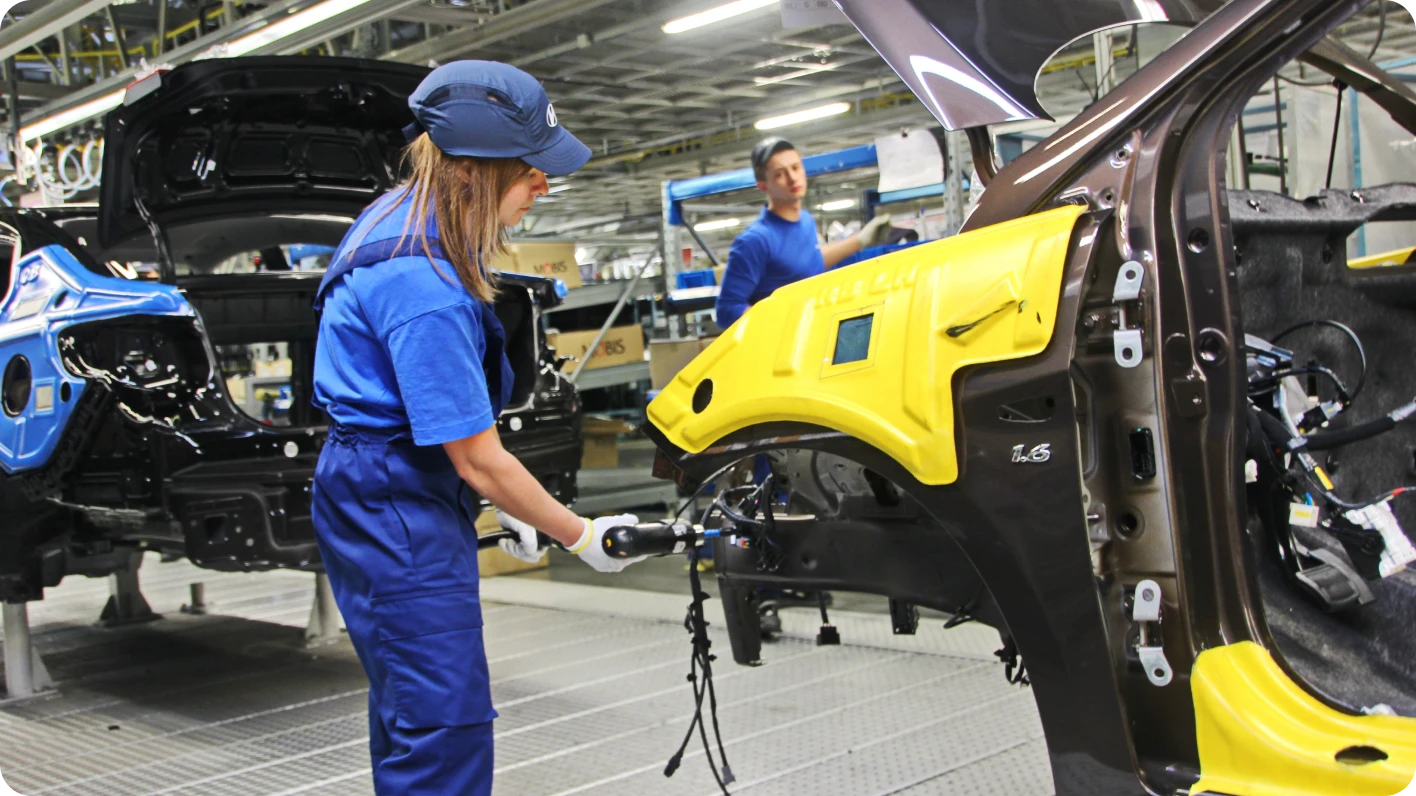
The U.S automotive industry has been hard hit by tariffs and trade volatility over the last year. These uncertainties are reshaping the cost of parts, the availability of materials and manufacturers’ ability to maintain stable production schedules, forcing OEMs and suppliers to make workforce decisions in an environment defined by unpredictability.
In conversations I’ve had with manufacturing leaders, the common theme is speed: when trade policy shifts with little warning, original equipment manufacturers (OEMs) and suppliers are forced to reassess sourcing, production footprints, launch schedules and capital investments in real time. That uncertainty flows directly into hiring: it’s difficult to commit to headcount when the cost structure of tomorrow’s build plan is unknown today.
The New Reality
The impact is already showing up in employer sentiment. Recent data indicates that 91% of auto industry employers say trade uncertainty is affecting their hiring plans, underscoring how widespread the disruption has become. In parallel, tariff instability in the U.S. could add up to $108 billion in additional costs for automakers. This puts pressure on margins and triggers a familiar set of near-term responses: pause discretionary spending, delay expansion plans, and slow or freeze hiring while leaders wait for clearer signals.
What makes this moment different is how quickly the ripple effect impacts shipping. As we’ve been hearing from purchasing and operations teams, a tariff announcement can cascade into supplier renegotiations, expedited shipments to beat effective dates, and sudden rebalancing between plants or regions. When critical components are delayed, or when purchasing teams pivot to alternate sources, production schedules shift and overtime spikes. Entire lines may even go idle.
Traditional Workforce Planning Is Out the Window
Trade policy shifts are not abstract: they have direct, immediate implications for manufacturing employment. I’ve seen even small changes in assumptions (timing, duty rate, country of origin) create outsized shifts in staffing needs at the plant level. Labor demand can shift within days, not quarters.
In this environment, the automakers who win will be the ones who treat workforce strategy as a competitive advantage, not just a cost line.
Here are the factors threatening traditional workforce planning.
1. Hiring Slowdowns and Increased Caution
Sudden cost increases from tariffs can stall investment or force reallocation of budgets. With 91% of employers reporting hiring hesitancy due to trade uncertainty, workforce plans have become more conservative and more complex, especially when factoring in the demands of electrification and digitalization.
2. Supply Chain Disruptions Affecting Labor Demand
Tariff changes ripple across the supply chain in ways that don’t map neatly to quarterly planning cycles. In practice, what I see most often is the compounding effect: suppliers absorb sudden landed-cost increases, customs delays or new documentation requirements that slow inbound flow, and then OEMs are forced into fast pivots — dual-sourcing, revalidating parts or shifting volumes between regions.
Those moves can temporarily reduce throughput while quality and logistics stabilize. The result is a stop-start pattern in production: schedule volatility, late engineering changes and launch timing risk. For plant leaders, that translates into fluctuating labor needs, adding weekend shifts one month, then cutting hours the next as material availability changes.
3. Skilled Automotive Talent May Disappear During Downturns
In a climate where 74% of auto manufacturers are struggling to find skilled talent, it could be devastating to lose key people. But periods of uncertainty can trigger layoffs or furloughs, and this poses a real risk of losing these highly skilled workers who may not be available once demand rebounds.
What Automotive Employers Need to Compete in a Volatile Trade Environment
Volatility requires flexibility — but not improvisation. The goal for OEMs and suppliers is to balance defensive measures (cost control, risk reduction, continuity planning) with offensive moves that preserve the ability to ramp up quickly when conditions stabilize. That means building a workforce plan that can absorb disruption without triggering talent loss, quality issues or missed production targets.
In practice, leading manufacturers are doubling down on four capabilities:
- Flexible labor models that scale with production reality
- Scenario-based workforce planning tied to supply and demand signals
- Retention approaches that protect critical skilled roles during slowdowns
- Rapid hiring engines that can re-accelerate when schedules rebound
Putting the Capabilities into Action: A Practical Workforce Playbook
1. Build flexible staffing models that scale smoothly.
Flexible workforce approaches help manufacturers adjust labor capacity quickly without the disruption and cost of large permanent headcount swings. The best models are designed to protect quality and safety while giving operations leaders real options when volumes rise or fall unexpectedly.
Common approaches include:
- Contingent workforce programs for production, logistics and skilled trades
- Virtual recruiting on demand
- Temp-to-hire pipelines that ensure long-term fit once market conditions stabilize
This flexibility becomes especially critical when tariff decisions, border delays or supplier disruptions change production needs with little warning.
2. Use scenario-based workforce planning (not single-point forecasts).
Because trade policy and supply conditions can change quickly, workforce planning needs multiple “ready-to-run” scenarios, such as tariff hikes, port delays, supplier insolvency, launch postponements or regional production shifts. For each scenario, leaders define a trigger (what signals a change), the labor response (overtime, redeployment, contingent labor, hiring pause), and guardrails to protect quality and safety.
Scenario planning often includes:
- Labor market analysis tied to global trade patterns
- Talent availability forecasts across U.S. manufacturing regions
- Workforce modeling across best-, base-, and worst-case production scenarios
- Flexible labor budgets aligned to new tariff-driven cost structures
Done well, this approach reduces reactive hiring and helps plants maintain productivity even when external conditions change rapidly.
3. Protect skilled automotive talent during slowdowns.
Periods of uncertainty can trigger layoffs or furloughs, but the long-term risk is losing the skilled roles that keep plants running: maintenance, quality, tool and die, automation techs and experienced team leads. When demand returns, these roles are often the hardest to replace — and the most expensive to lose.
Retention strategies during volatility focus on keeping critical knowledge in-house while managing cost pressure responsibly.
Retention strategies:
- Engagement and development programs for critical, skilled roles
- Uptraining pathways that prepare workers for evolving production needs
- Competitive pay benchmarking based on real-time market data
- Career-progression planning to keep workers committed during uncertain periods
The point is simple: volatility is temporary, but talent loss can be permanent. Protecting high-value skills keeps manufacturers positioned to rebound faster than competitors.
4. Prepare for the rebound: rapid ramp-up without compromising quality.
When trade conditions stabilize — or when supply constraints ease — automotive demand can return quickly. Companies that paused hiring may suddenly face production surges that require hundreds (or thousands) of workers fast. The challenge is scaling headcount while maintaining safety, throughput and quality standards during a high-pressure ramp.
High-performing ramp-up approaches typically include:
- Large-scale recruitment engines
- Multisite staffing coverage across OEM and Tier1/Tier2 facilities
- Onsite workforce management teams to accelerate hiring
- Specialized sourcing for skilled and semiskilled automotive roles
With the right infrastructure in place, manufacturers can capture rebounds instead of lagging behind competitors when the market turns.
At this point, many automotive leaders reach the same conclusion, and it’s one I’ve heard repeatedly in discussions with OEMs and suppliers: building these capabilities internally is possible, but it’s rarely fast. And in a trade environment where tariffs and supply conditions can shift overnight, speed matters.
Where Manpower Comes In: Operationalizing Agility at Scale
Manpower helps automotive OEMs and suppliers turn workforce strategy into day-to-day execution so plants can flex labor, safeguard critical skills and accelerate hiring as production schedules shift.
- Flexible staffing models, including contingent and temp-to-hire options, scale capacity up or down without sacrificing operational control.
- Scenario-based workforce planning aligns labor strategies to production realities, whether triggered by tariff changes, supplier disruptions or delayed launches.
- Retention and skills development programs protect hard-to-replace talent while preparing teams for evolving manufacturing requirements.
- Rapid talent deployment, powered by high-volume recruiting and onsite workforce management, supports fast ramp-ups when conditions rebound and timelines compress.
Take the Next Step
Trade policy volatility and tariff uncertainty are reshaping the automotive operating model, and the organizations that stay competitive will be the ones that plan for volatility while keeping a clear path to ramp when conditions turn. If you’re reassessing workforce strategy in light of tariff pressure or supply instability, the right partner can help you move from reactive staffing to resilient workforce planning. Connect with Manpower.
About the Author
Mike Dixon, Vice President, Global Client Solutions, ManpowerGroup
 Mike provides strategic leadership to global automotive manufacturers, leading cross-brand initiatives that deliver integrated workforce and talent solutions across the automotive value chain. He works closely with executive and operational leaders to align ManpowerGroup’s capabilities with evolving business needs as organizations navigate transformation, scale, and disruption — always with a focus on long-term partnerships and measurable value. With more than 35 years at ManpowerGroup and over four decades in the staffing industry, Mike brings deep expertise in workforce solutions for complex, high-volume manufacturing environments and is widely regarded as a trusted advisor to automotive clients.