

What Is a Maintenance Technician?


Maintenance technicians perform a combination of preventive maintenance, troubleshooting, inspection and repair work in manufacturing environments.
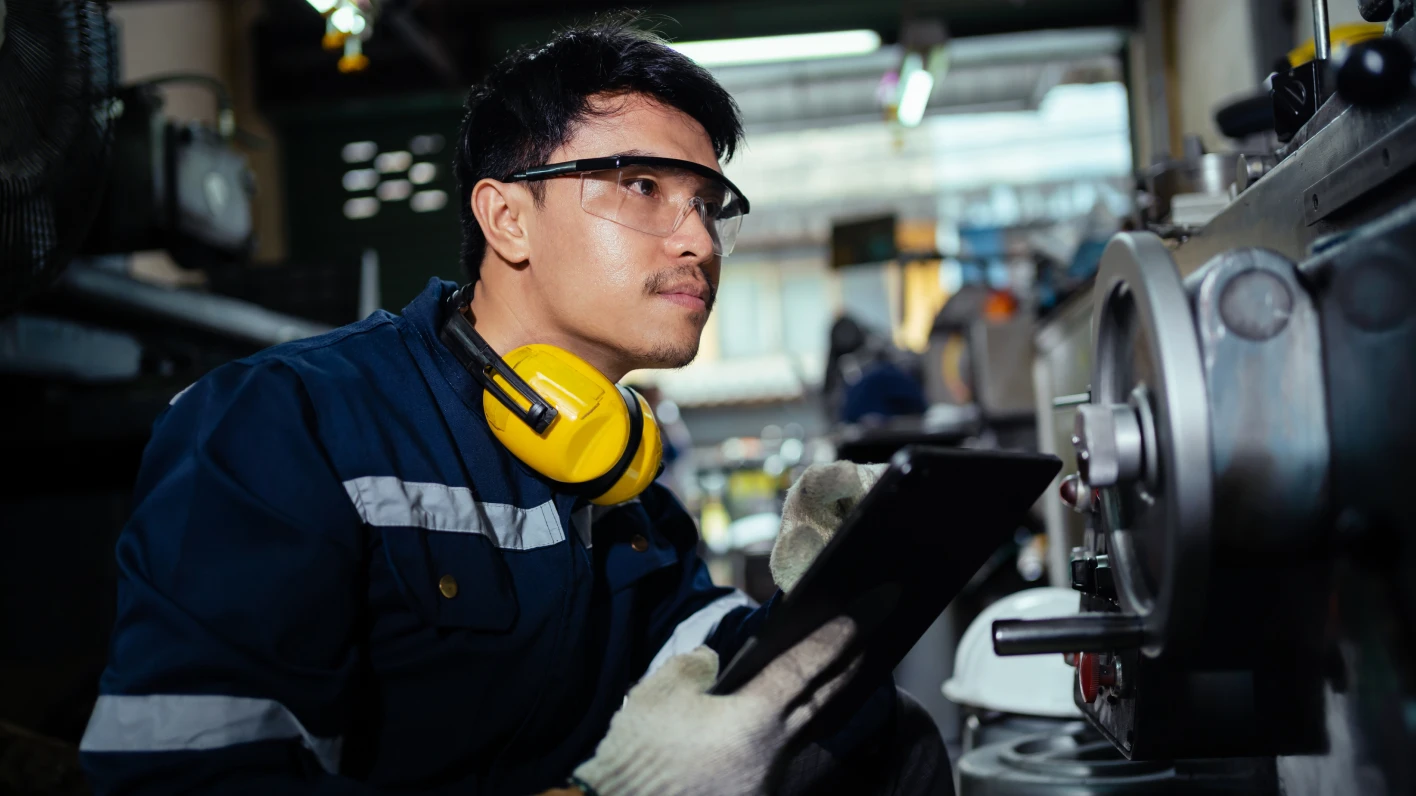
The manufacturing industry runs on equipment. From conveyor systems and robotic arms to packaging lines and automated production cells, every machine must operate reliably to keep production moving. That's where maintenance technicians come in.
Maintenance technicians play a critical role in modern manufacturing facilities. They help prevent downtime, troubleshoot problems, repair equipment and support the advanced technologies that power today's factories.
If you enjoy solving problems, working with technology and tackling a new challenge every day, a manufacturing maintenance career may be worth exploring.
What Does a Maintenance Technician Do?
Maintenance technicians perform a combination of preventive maintenance, troubleshooting, inspection and repair work.
Their responsibilities commonly include:
- Inspecting equipment and machinery
- Finding the cause of problems
- Replacing worn or damaged components
- Performing scheduled preventive maintenance
- Lubricating equipment and adjusting machine settings
- Responding to equipment breakdowns
- Testing machines after repairs
- Maintaining maintenance logs and service records
- Supporting equipment installations and upgrades
When a machine stops working, production can slow down or stop altogether. Maintenance technicians help find the problem and get equipment running again as quickly as possible.
What Is a Typical Day Like?
Because every piece of equipment is different, the job offers plenty of variety. Some days focus on planned maintenance. Other days involve fixing unexpected breakdowns.
For example, on a typical shift you might:
- Replace a faulty sensor on an automated production line
- Troubleshoot a robotic cell
- Repair a conveyor motor
- Update maintenance records
- Coordinate with production teams during equipment downtime
- Assist engineers with equipment improvements
The variety is one reason many technicians enjoy the role.
What Hours Do Maintenance Technicians Work?
Manufacturing facilities often operate around the clock, which means maintenance technicians may work a variety of schedules.
Potential shifts include:
- First shift
- Second shift
- Third shift
- Weekend schedules
- Rotating shifts
- On-call assignments
Overtime may occasionally be required during equipment failures, shutdowns or production surges.
What Skills Do Employers Look For?
While some employers hire entry-level candidates and provide training, maintenance technicians who have a mix of technical skills and workplace skills are often the most competitive job applicants.
Technical Skills
- Mechanical troubleshooting – Finding and fixing problems with machines, motors, belts and other equipment.
- Electrical troubleshooting – Identifying issues with wiring, sensors, switches and electrical components.
- PLC and control systems knowledge – Understanding the computerized systems that control manufacturing equipment.
- Robotics and automation experience – Working with automated machines and robotic equipment used on production lines.
- Hydraulics and pneumatics – Maintaining systems that use liquid pressure (hydraulics) or air pressure (pneumatics) to power machinery.
- Welding and fabrication basics – Making simple repairs, creating replacement parts or modifying equipment when needed.
- Reading schematics and technical drawings – Following diagrams and blueprints to understand how equipment works and locate problems.
- Computerized Maintenance Management Systems (CMMS) – Using software to track maintenance schedules, repairs and equipment performance.
Soft Skills
Successful maintenance technicians also excel in:
- Problem-solving – Thinking through equipment issues and finding the best solution quickly and safely.
- Teamwork – Collaborating with others to keep equipment running and production on schedule.
- Adaptability – Learning new technologies and adjusting to changing equipment or production needs.
- Attention to detail – Spotting small problems before they become larger and more costly repairs.
- Manual dexterity – Maintaining good physical strength and eye-hand coordination
- Time management – Prioritizing repairs and maintenance tasks to minimize equipment downtime.
- Safety awareness – Following safety procedures to protect yourself, your coworkers and the equipment.
The ability to stay calm under pressure is particularly important when equipment failures affect production schedules.
What About AI and Automation Skills?
More and more manufacturers are investing in smart factories, connected equipment and predictive maintenance programs to help identify problems before a breakdown occurs. That means technicians who can work with digital technologies alongside traditional mechanical systems are highly valued.
Some of the most sought-after skills include:
- Predictive maintenance systems
- Equipment health monitoring
- Sensor data interpretation
- Robotics troubleshooting
- Automation systems knowledge
- PLC programming fundamentals
- Industrial IoT technologies
- Data and dashboard interpretation
- CMMS analytics
- AI-enabled diagnostics
The future maintenance technician is often part mechanic, part electrician and part technology specialist.
What Education or Training Is Required?
Requirements vary by employer and facility, but according to the Bureau of Labor Statistics, many industrial machinery mechanics enter the field with a high school diploma and gain skills through formal training programs and significant on-the-job training. These include:
- Technical school certificates
- Community college programs
- Apprenticeships
- Military training
- On-the-job training in manufacturing environments
The CMRT
One of the most common certificates maintenance technicians seek is the Certified Maintenance and Reliability Technician (CRMT) credential. This certificate requires passing an exam to show competency in four areas:
- Maintenance practices
- Preventative and predictive maintenance
- Troubleshooting and analysis
- Corrective maintenance
The CMRT is t highly valued across industries like manufacturing, oil & gas, utilities, food processing, and aerospace.
Is Maintenance Technician a Good Career?
If you enjoy hands-on work, technology and problem-solving, maintenance can offer a rewarding long-term career path.
Here’s why:
- Strong demand for skilled workers
- Competitive wages
- Career stability
- Opportunities to work with advanced technology
- Multiple advancement opportunities
- Transferable skills across industries
Many technicians eventually advance into roles such as:
- Senior maintenance technician
- Reliability technician
- Maintenance planner
- Maintenance supervisor
- Automation technician
- Controls technician
- Engineering technician
What Is the Employment Outlook for Maintenance Technicians?
The outlook remains strong.
The Bureau of Labor Statistics projects that:
Employment of industrial machinery mechanics will grow 16% between 2024 and 2034, much faster than the average for all occupations.
The field is expected to produce approximately 45,700 job openings annually.
Several trends are contributing to this demand:
- Increased manufacturing automation
- Growth in robotics and advanced production equipment
- Reshoring of manufacturing operations to the U.S.
- Retirements among experienced skilled trades workers
- Greater emphasis on machine reliability and uptime
At the same time, ManpowerGroup research shows that 75% of U.S. manufacturing employers report difficulty finding skilled talent, highlighting the ongoing need for workers with maintenance and technical skills.
The Takeaway: Your Staffing Agency for Maintenance Technician Jobs
What is a maintenance technician? Simple: it’s the worker that everyone relies on to keep modern manufacturing running
Maintenance technicians troubleshoot problems, repair equipment, support automation systems and help manufacturers stay productive.
As factories continue adopting robotics, AI and advanced technologies, maintenance roles are becoming more technical, more specialized and more valuable. For individuals who enjoy solving problems and working with technology, it's a career path that combines hands-on work with strong long-term opportunities.
Ready to explore maintenance technician jobs? Browse current openings through Manpower, a leading staffing agency that connects skilled manufacturing talent with employers looking to hire in your area.